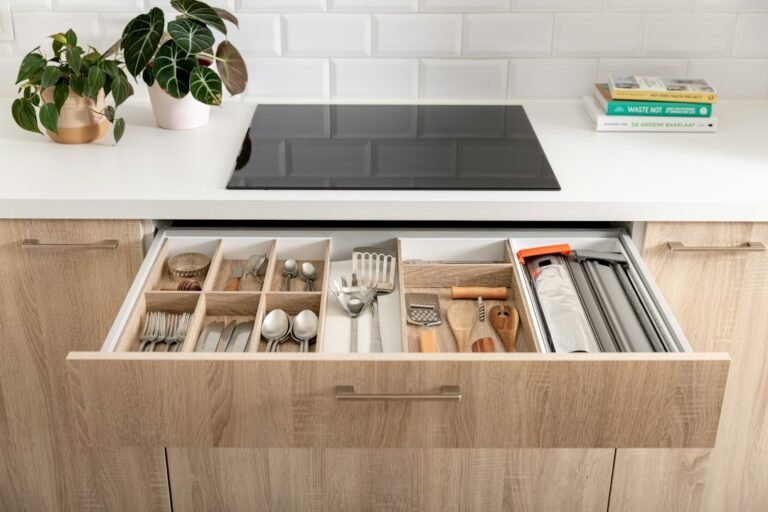

Make One Daily Routine Easier: A Small Home Organization Reset
At a glance: Follow one daily routine, identify its awkward moments and change one setup at a time. Keep frequently used belongings findable, walking routes clear and the person using the home in charge of the arrangement.
A small inconvenience repeated every day can become the part of a room that matters most. A charger may sit beyond a comfortable reach. A cupboard may require moving several heavy items to get the one you use. A helpful visitor may tidy something into a place you would never think to look.
The most useful changes begin with the person living in the space. Age alone does not tell you what needs adjusting. Follow an ordinary routine and choose the change that would make it easier for you or the person you are helping.
Follow one ordinary route
Choose a familiar sequence such as getting ready in the morning, making a drink or leaving for an appointment. Notice where you stop to search, move around an obstruction or ask someone to retrieve an item. Write down the awkward point and what would make it easier.
Keep the review manageable. You can examine one room or one activity without reorganizing the whole home. If a routine involves difficulty with balance, pain, vision or mobility, discuss the concern with an appropriate health professional rather than treating every problem as a storage issue.
Move the useful items, with agreement
Choose accessible storage for the items used most often, based on the person’s comfortable reach and preferences. Put occasional items elsewhere and make sure the regular items can be returned without moving a stack. Ask before changing familiar arrangements.
Test the actual sequence. Can the person see the item, retrieve it, use it and put it away? A container that looks neat may be too heavy or awkward to open. Try an available tray or basket before buying new equipment, and keep the number of locations easy to remember.
Make a separate safety check
The CDC’s Check for Safety checklist covers household hazards such as objects on floors or stairs, troublesome cords, loose rugs and inadequate lighting. Use that checklist alongside your organization review; keep routes and stairs clear, and make needed lighting easy to operate.
A storage change cannot address every fall concern. Ask a qualified professional about repairs, grab bars or other modifications that need appropriate assessment or installation. Use assistance for lifting, reaching or moving furniture when needed. Avoid climbing on a chair to reach stored belongings.
Use labels the household can work with
Choose words the person recognizes and print them in a size they can comfortably read. A label such as ‘Phone charger’ may be more useful than a broad decorative category. Ask whether a label helps before adding it to every drawer.
Check the label in its real location and lighting. A clear container can be useful when its contents are visible and its weight is manageable; an opaque container may be preferred for privacy or to reduce visual clutter. Let the person using the system help choose.
Keep support information findable and private
Agree where to keep current contacts for trusted people, household services and relevant care professionals. A visible note can point to the contact list without displaying detailed account numbers or sensitive health information to every visitor.
Use an agreed protected location for information that needs privacy. Make sure an authorized helper knows how to find what they need. Review the contact list after a provider, phone number or support arrangement changes, and remove outdated copies so people do not have to guess which one is current.
Tell helpers what should stay consistent
A short note can explain the arrangements that matter: ‘Glasses stay in this tray,’ ‘Please ask before moving papers,’ or ‘The kettle and everyday mugs stay together.’ Include the preferences of the person living there and make sure helpers know where the note belongs.
Choose a way to propose changes. A visitor can point out an awkward location and ask about trying a different one. When an arrangement needs to change for safety or access, explain the reason and involve the person in finding a workable alternative.
Example: making a familiar drink easier to prepare
Imagine someone enjoys making their own tea but has to search two cupboards for the mug and tea bags. With their agreement, place the supplies together in a convenient location while keeping appliances and cords arranged according to their instructions. Check that containers can be opened comfortably and that the storage does not crowd the working area.
Try the routine and ask what helped. Perhaps the mug should stay in its familiar cupboard while only the tea needs moving. Accept that preference if the arrangement is workable. If handling hot water has become difficult or unsafe, seek appropriate professional advice about the task rather than assuming a new basket will solve it. Keep ordinary organizing changes within what they can use comfortably.
Test one change before adding another
Use the new arrangement for several ordinary days. Notice whether it reduces effort and whether the person keeps using it without repeated prompts. If it is confusing, return to the earlier arrangement where appropriate or try a smaller change.
Keep a short record of what helped and any concern that needs further advice. The aim is a home that supports daily life and personal choice. One dependable location or easier routine is useful progress even when the rest of the house stays familiar.
Your first 15 minutes
- Choose one daily route.
- Ask which moment causes the most trouble.
- Agree and test one small change.
Related Organize-Declutter guides
Featured photo: Arturo Añez / Unsplash.