Kitchen Organization That Reduces Reaching, Bending, and Daily Friction
At a glance: Follow one daily kitchen task and move frequently used items into comfortable reach. Keep heavy objects manageable, leave working and walking space clear and test changes with the person who uses the kitchen.
Let your daily movements design the kitchen
Before buying another cabinet organizer, notice the objects you use during breakfast, lunch and dinner. Put them on a short list. Cups, plates, coffee supplies and the everyday pan usually deserve the most reachable space. Holiday platters do not.
The CDC’s home fall-prevention checklist recommends keeping frequently used kitchen items where they are easy to reach. For people with pain, balance changes or limited movement, small adjustments may matter more than a complete renovation.
Create an easy-reach everyday zone
Move routine plates, glasses, utensils and dry ingredients into shelves or drawers you can reach without climbing or deep bending. Keep heavy cookware at a manageable height rather than overhead. A rolling cart can help in some homes but should never obstruct a walking route.
Test the new arrangement during a real meal. Can you reach the kettle, mug and tea without crossing the kitchen three times? Does the cupboard open without forcing you to twist around a chair? Organization should respond to actual movements.
Keep counters useful rather than empty
A perfectly bare counter looks attractive in photos but may be unhelpful if you must lift a heavy appliance from a low cabinet every day. Choose a small, defined space for genuinely frequent tools. Give everything else a home based on frequency of use.
Provide clear preparation space for chopping and plating. Keep spills cleaned promptly and cords routed away from pathways. Think of the counter as a workbench, not an exhibit.
Design for visibility and safe access
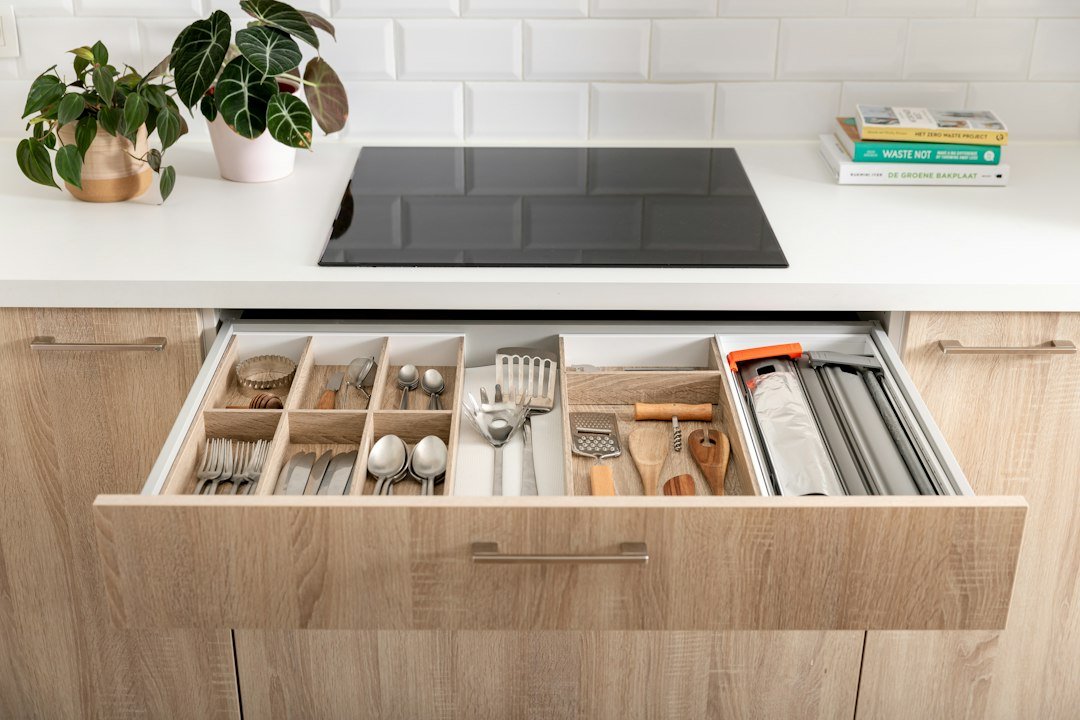
Use larger, readable labels where you need them and group similar foods or utensils together. Good lighting matters when reading packages, finding a sharp tool or checking a spill. If a drawer is overloaded, divide it before buying an elaborate insert.
Avoid standing on unstable stools to reach a seldom-used item. If a high shelf is essential, consider asking for help or reassigning its contents. An occupational therapist may be useful for specific mobility or accessibility needs.
Build stations around tasks, not matching containers
Put dish detergent and sponges near the sink, breakfast supplies near the place you prepare breakfast, and daily cooking items near the stove where safely appropriate. Use what you already own before purchasing baskets or bins.
For multi-person households, choose a layout everyone can understand. A visitor should not have to search twelve identical unlabeled jars to find sugar. Clear systems are more valuable than visually coordinated clutter.
Try one cabinet before the entire room
Pick the cabinet that causes the most frustration. Empty it, discard expired items when appropriate, clean the space, and return only things that belong there. Spend three normal cooking days testing the arrangement, then change it if needed.
If an adjustment involves electrical work, built-in cabinetry or safety equipment, use the appropriate qualified professional. The immediate goal is an easier breakfast tomorrow, not a six-month kitchen project.
Walk through breakfast with the person who cooks
Choose a familiar task such as making tea or serving cereal. Notice which cupboard opens, what must be moved and where the person pauses to search or stretch. Ask what feels awkward. A layout that suits a standing visitor may not suit the person who usually sits, uses a mobility aid or has a painful shoulder.
Try one small change with the person’s agreement: the everyday bowl in an easier drawer, the frequently used mug beside its usual preparation area or fewer duplicate utensils in a crowded tray. Keep food, cleaning products, heat sources and appliance instructions in mind when selecting a location.
Test a proposed purchase before committing
Measure the cabinet and doorway clearances before buying a pull-out organizer or cart. Check the item’s load rating, whether it can be secured as intended and whether it will narrow a route. A product photograph does not show how it will work in your particular kitchen.
Use an existing tray or box to test a grouping where safe, then watch the arrangement through several meals. If reaching, pain or balance remains a concern, ask an occupational therapist or other appropriate professional for an individual assessment. This organizing trial is not a substitute for that assessment.
Your first 15 minutes
Choose one repeated kitchen task, identify its three most-used items and agree on one easier location. Test the change at the next meal before rearranging the rest of the room.
Related Organize-Declutter guides
How to Make Your Home Easier and Safer to Live In
Expert sources
CDC: Check for Safety Home Checklist