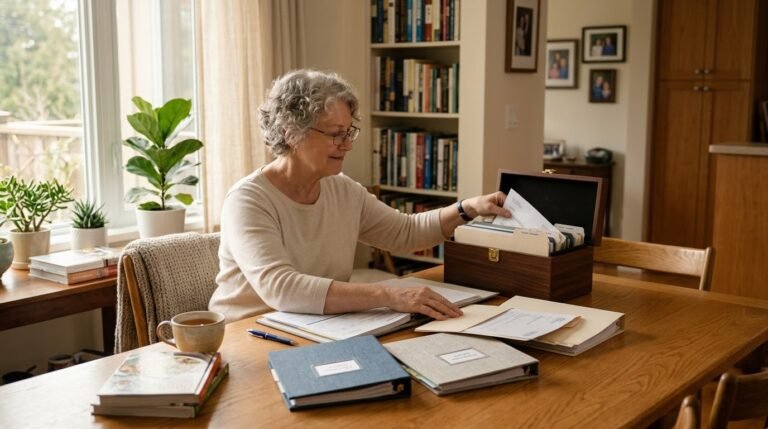

Keeping Daily Essentials and Important Information Easy to Find
At a glance: Choose consistent places for everyday essentials and agree how trusted people can locate important information. Preserve familiar routines, protect privacy and make changes with the person who uses the space.
Good support often depends on small, dependable arrangements. The glasses are where you expect them. A helper can find the household contact without opening every drawer. A person returning from an appointment knows where the next date was recorded.
Being in your eighties or beyond does not prescribe how much help you need. This approach suits independent living, shared homes and households with regular support. Begin with the person’s preferences and the specific task that needs to become easier.
Ask which arrangements matter most
Start with a conversation about an ordinary day. Which belongings should always be close by? What takes unnecessary searching? What would the person like help with, and what do they prefer to manage themselves? Ask before offering a new storage plan.
The Administration for Community Living describes person-centered planning as a process directed by the person receiving support, with their goals and preferences at its center. Apply that principle to everyday organizing: explain proposed changes, invite choices and involve the person as fully as possible.
Create one dependable essentials spot
Choose a stable, reachable place for the belongings used in a particular activity. This might be a bedside tray for glasses and the phone, a small table for an appointment folder or a familiar location for a remote control. Keep the arrangement suited to the person using it.
Avoid adding every important object to one crowded surface. Different activities may need different locations, but each item should have an agreed home. Test whether it can be seen, reached, used and returned comfortably. Keep charging cords and other items from creating obstacles.
Prepare a short information index
Write down what information exists and where an authorized person can find it. Useful headings may include Trusted Contacts, Household Services, Appointment Information and Important Records. Use readable print, clear dates and language the person recognizes.
Keep the index brief enough to check easily. It can point to a protected folder for detailed information rather than displaying sensitive records openly. Agree who may use it and how they will get access when needed. A large binder may be useful for some households, but a few clear pages may be easier for others.
- Who to contact for an agreed household problem.
- Where the current appointment information is kept.
- Where authorized people can locate essential records.
- What the person wants helpers to ask before changing.
Separate a useful contact from permission to act
A list of trusted people is helpful, but it does not answer every access question. The CFPB’s financial-caregiver guide explains that support arrangements have different roles. A trusted contact, for example, does not automatically gain access to the person’s money.
Ask the relevant institution or qualified professional about the authority required for a particular task. Keep passwords and sensitive account details in the appropriate protected system. Record an agreed instruction location rather than assuming every family member or helper should receive unrestricted information.
Give helpers a consistent way to leave an update
Choose one place for routine updates the person has agreed to share. A simple note might record that a service visit is booked, a household supply was replaced or a question needs following up. Include the date and the name of the person leaving it.
Keep this household log within its intended purpose. It does not replace professional care records or medication instructions. When health or care arrangements change, follow the relevant professionals’ guidance and clarify who is responsible for updating the information.
Keep meaning in the everyday space
Organization can make room for belongings that bring comfort: a favorite photograph, a well-used book or something connected to an important person. Ask what should remain visible and within easy reach. Familiarity and personal meaning deserve a place in decisions about the room.
If the person wants to share stories or identify belongings for family, record the information at a comfortable pace. A short note about one photograph can be enough for a session. Do not turn a conversation about memories into pressure to give things away or complete a whole legacy project.
Example: welcoming a new helper
Imagine a new helper is visiting regularly. Before the first routine visit, the person receiving support chooses what they would like explained: where everyday essentials belong, how to find the agreed household contacts and which belongings should stay in familiar positions. The discussion can be brief and can include someone they want present.
Afterward, check whether the arrangement worked for the person living there. Update one instruction if needed and let the helper know about it. Avoid leaving several competing notes on different surfaces. Where professional care is involved, use the provider’s required communication process as well. A consistent household note supports everyday preferences; it should not override professional instructions or expand the helper’s agreed role.
Check gently when circumstances change
Review the essentials spot and information index after a change in living arrangements, a new helper or an altered daily routine. Ask what still works before rearranging anything. Update stale contacts and remove superseded copies safely.
Finish with a clear agreement about the next small step and who will handle it. Dependable locations and understandable information can make daily support easier while preserving the person’s choices. Start with one useful arrangement and let the rest develop from there.
Your first 15 minutes
- Ask which everyday item is hardest to find.
- Agree on its consistent home.
- Check one important contact or instruction location together.
Related Organize-Declutter guides
- When Care Needs Change
- Help a Parent Declutter Without Taking Over
- Explore Comfort, Support and Legacy
Featured photo: Sincerely Media / Unsplash.